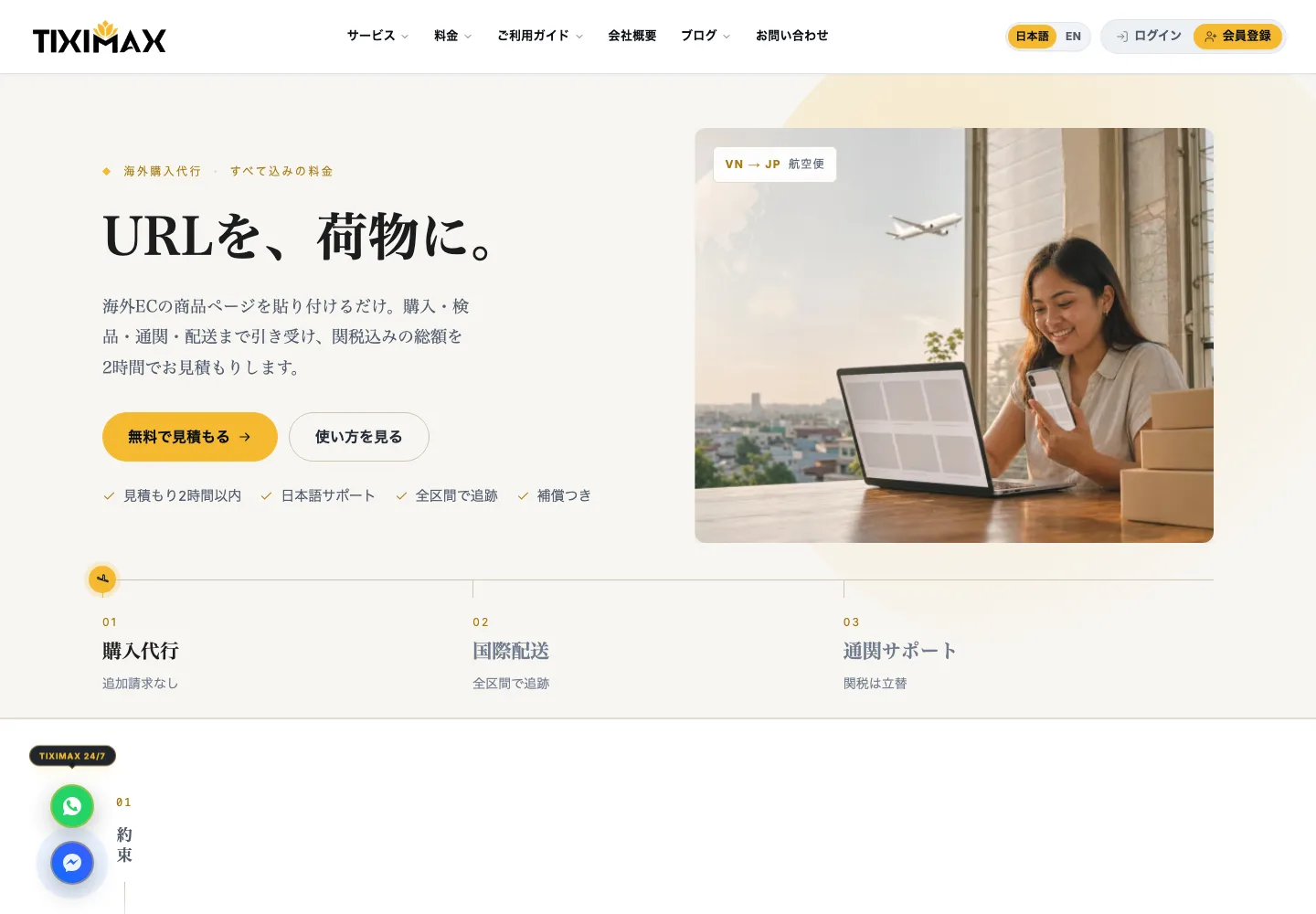
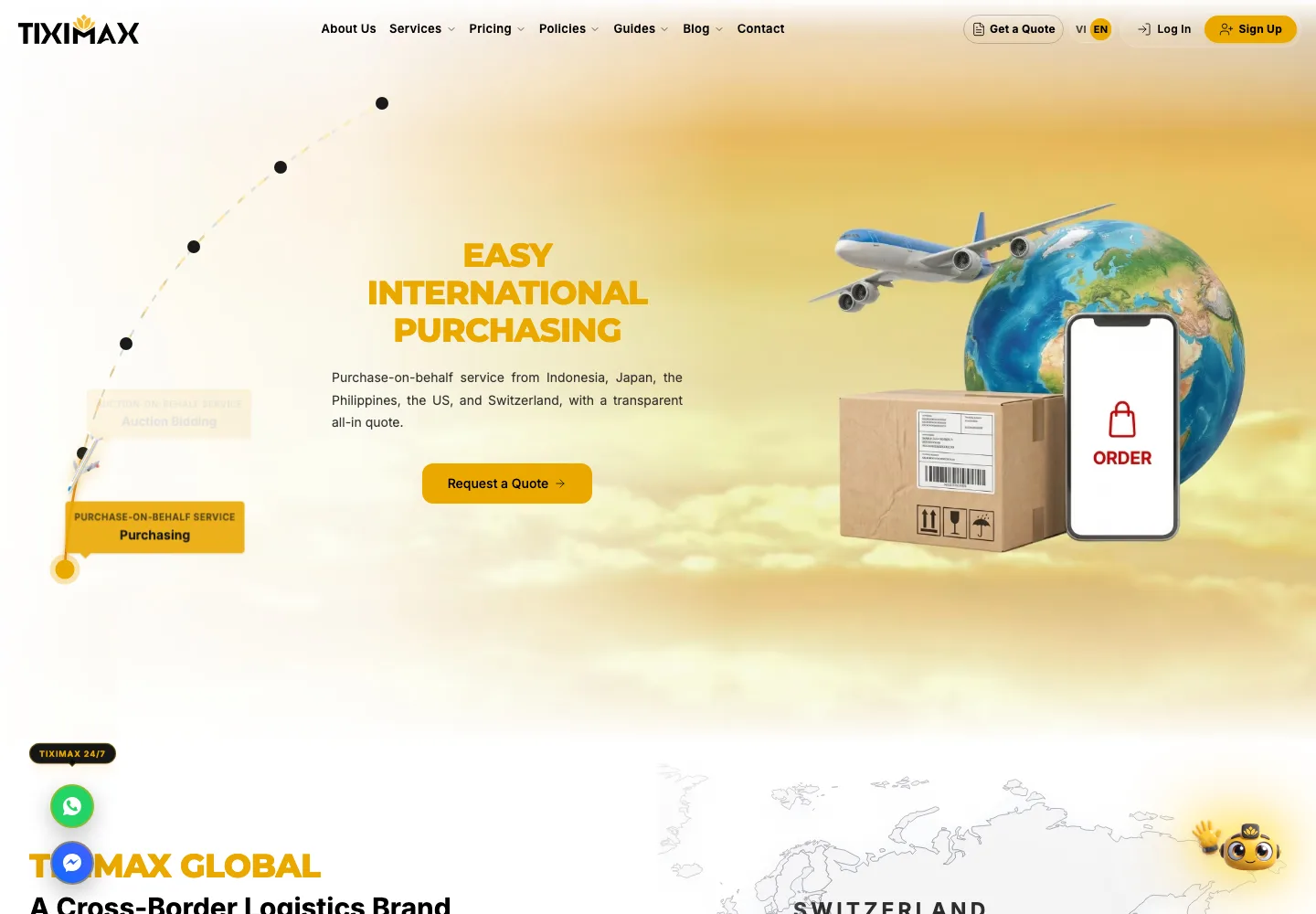
This is a conceptual diagram organizing the development scope. It is not an actual system screen or architecture diagram.
CHALLENGE
The challenge
In cross-border logistics, a single request involves goods, packaging, warehouse operations, and multiple transportation segments. It was necessary to manage which items belong to which packaging and transportation, and track their progress, linking them to the tasks of each responsible person.
OUR WORK
Our approach
Built a logistics platform that handles goods, packages, warehouses, transportation segments, air waybills, and shipments. Managed from consolidated shipping to transportation reservations, documents, customs clearance records, shipping, and arrival as status, and established touchpoints for handling package integration, segmentation, and tracking information.
OUTCOME
Delivery & operations
While managing packages and transportation as separate units, a structure is established that allows tracking their relationships. It supports the work of warehouse staff, administrators, and users, including pre-shipment status checks and delivery records. CRM and customer support are introduced as separate development areas.
PROJECT STORY / BUSINESS & ENGINEERING
Design TIXIMAX's logistics from both the goods and business operations perspectives.
In cross-border logistics, one request, one item, and one shipment are not the same unit. We introduce a foundation for managing on-site work by linking warehouses, packaging, transportation segments, documents, and arrival.
Multiple tasks behind logistics services.
TIXIMAX is a business that guides through purchase agency and international shipping. For customers, it's an experience where
This article focuses on the development of TIXIMAX's logistics management system. Beyond registering parcels and displaying tracking numbers, it manages parcel groupings, transport legs and the actions available at each stage. Service information is available on the Japan websiteandinternational website for details of the available services.
Don't treat goods, packaging, and transportation as the same thing.
When several items are packed together, a parcel is split, or multiple packages travel in one shipment, putting everything under a single number makes the relationships hard to follow. Items and parcels, the packaging that groups them, and the transport that moves them need to be modeled separately.
The logistics service manages parcels, packaging, outbound movements and transport legs, including consolidation, splitting and nested package structures. Warehouses, carriers, forwarders and air waybills are maintained as distinct records linked through their operational relationships.
This is not about making data items more detailed. It's a way to organize things so that staff can check from different processes whether
Don't treat shipping as a single status update.
The export process includes mixed loading, transportation booking, documents such as Commercial Invoice and Packing List, records of customs clearance, shipping, and arrival. Simply displaying 'shipped' does not indicate how much of the necessary work before that has been completed.
In implementation, we handle state changes from 'Customs Cleared' to 'Shipment Ready', and from 'Shipment Ready' to 'In Transit'. The shipping process proceeds after confirming the current state and the customs cleared record. We also combine the update of transportation and the recording of events that communicate the changes.
Showing progress and deciding whether to proceed to the next step are separate actions. Logistics management requires handling both aspects. The 'customs cleared' record mentioned here does not mean that the system automatically obtains customs clearance.
Tracking means following the relationship between parcels and transport
Customers and staff want to know not just the last updated string, but where their shipment is in the process. A single shipment involves multiple packages, and a single package's delivery involves multiple segments.
The logistics platform has a touchpoint that aggregates tracking information related to packages and transportation segments, and a mechanism to receive Webhooks from shipping companies. This setup transfers information generated on the shipping side to the party managing the packages.
Receiving external events and internal business operations do not always occur at the same time. Determining which information to associate with which package, and how to handle duplicate operations or notifications, falls within the scope of system integration design.
Separate customer support and warehouse operations by role.
The operations for users to check requests and shipments differ from those for staff to manage shipments and transportation. In logistics services, the touchpoints for administrators, business staff, and users are separated to structure the handled operations.
In addition, inquiry responses require not only information about the goods but also customer information and the history of consultations. This area is separated in terms of roles from the CRM and customer profile side. Instead of cramming all sales functions into the logistics screen, we organize the information each party is responsible for and the boundaries of collaboration.
Regarding the connections between conversations, assigned personnel, negotiations, and order drafts,TIXIMAX's CRM and multi-channel development case studyThis is introduced in detail. It presents the same business from different development areas of logistics and customer support.
What we want to convey in this case study.
Logistics systematization is not just about replacing paper information with input fields. It is development that organizes the grouping of physical items, movement segments, business status, and the roles of personnel, and represents these relationships on the screen and in the data.
Famgia considers where to standardize and where to maintain independent management units based on an understanding of actual business operations. Even for cross-border or multi-location operations, it aims to create a structure that can pass information to the next task without summarizing everything into a single abstract
WHAT WE BUILT
Specific construction scope.
The tasks I was responsible for in this project 6 system areas.
01
Packages, packing & warehousing
Manage products, parcels and packing, warehouse data and dispatches, including grouped, split and nested packages.
02
Transport legs & air waybills
Manage routes, carriers and forwarders, and link MAWB and HAWB air waybills to transport legs.
03
Export workflow & documents
Handle consolidation, transport bookings, commercial invoices, packing lists, customs-clearance records, departure and arrival.
04
Shipment tracking
Consolidate tracking data for parcels and transport legs, with integration points for carrier events.
05
Customer & operator interfaces
Separate administrator, operator and customer actions for forwarding requests and parcel checks.
06
Status checks & service integration
Check readiness before advancing a shipment, recording status transitions and notification events across services.
TIXIMAX / BRAND & SERVICES
Goods crossing borders and, Connect the touchpoints with customers.
TIXIMAX guides from overseas purchase agency to international delivery. Behind the services your customers use, there is a logistics infrastructure to move goods and a customer support infrastructure to connect inquiries and negotiations.
Here, we introduce the official websites for Japanese and global audiences, conveying the background of the business.
Car film sales and installation providers (Southeast Asia)
Results
Online completion of warranty issuance, verification, and authenticity checks. The head office can now manage the installation store network and inventory allocation.