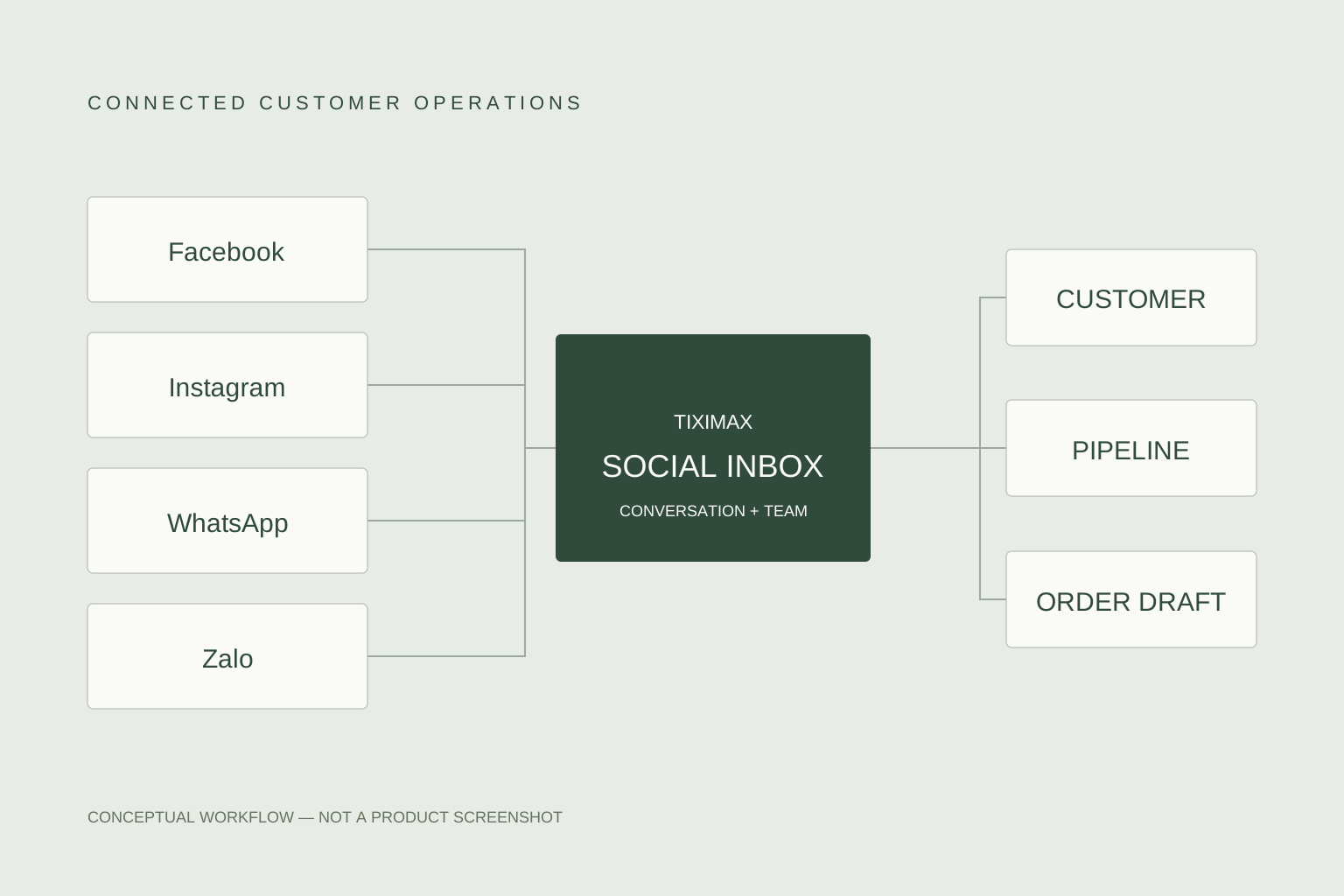
This is a conceptual diagram showing the connection in customer support. It is not an actual system screen.
SYSTEM OVERVIEW
01Inquiry from channels
02Customer & assigned personnel confirmation
03Sales opportunity & follow-up
04Order & delivery coordination
This is a conceptual diagram organizing the development scope. It is not an actual system screen or architecture diagram.
CHALLENGE
The challenge
When the number of touchpoints through SNS and messages increases, conversations, customer information, assigned personnel, sales opportunities, and orders tend to become isolated. A foundation is needed to check the history of responses and the next tasks regardless of the source of the inquiry.
OUR WORK
Our approach
Composed of Social Inbox, customer profile integration, sales pipeline, order draft, and campaign. Prepare connections and message processing for Facebook, Instagram, WhatsApp, Zalo, and connect customer verification, sales management, and order handover from conversations.
OUTCOME
Delivery & operations
By associating each channel's conversation with a sales representative and sales opportunity, you can check the context of customer information and orders. After a sales opportunity is closed, staff will review the order draft and pass it to the receiving party. The scope of each channel's offerings varies depending on API permissions, reviews, and connection settings.
PROJECT STORY / BUSINESS & ENGINEERING
From response to customer understanding and order flow.
Introduce TIXIMAX's CRM development that not only consolidates conversations across Facebook, Instagram, WhatsApp, Zalo, but also connects customer information, assigned personnel, sales discussions, and draft orders.
Even if you can respond, sales work may not be connected.
When receiving inquiries through multiple SNS and messaging apps, the conversation history is separated by channel. If, when the responsible person changes, it is unclear who the consultation was with, what needs to be confirmed, and what should be done next, customer support cannot proceed even if it is ready to reply.
What TIXIMAX's CRM handles is the work before and after these conversations. It consists of conversation management via Social Inbox, linking with customer profiles, sales pipelines, order drafts, and campaigns, connecting inquiries to the sales and order process.
We are not just aiming to display all SNS on the same screen. We place emphasis on ensuring that the person in charge can confirm the context of the customer and business operations, regardless of the channel the inquiry comes from.
Even if channels are unified, connection conditions may not be consistent.
Social Inbox has a configuration that handles channel connections, incoming webhooks, message distribution, assignment of responsible persons, replies, and attached media. It supports connections and processing for Facebook, Instagram, WhatsApp, Zalo, and connects external channels to conversation management.
The APIs used, types of accounts, and content that can be sent vary by channel. You cannot handle WhatsApp messaging, Zalo media processing, and identification of Meta channels with the same connection settings alone. The configuration is divided into common conversation management and channel-specific processing.
Although TikTok also has Business Messaging code, the source notes that it is awaiting verification via real API. In this article, we do not consider it as an operational case under the same conditions as Facebook, etc. Also, the focus is mainly on customer support and message integration, and This is not an explanation that all video postings and ad operations on all SNS are automated uniformly.
Connect SNS contacts to customer information.
The account on the channel and the customers handled in the business are not necessarily the same unit. There are cases where the customer is not identified at the time of consultation, and there are also cases where one customer has multiple contacts or addresses.
At the foundation of the customer profile, information such as multiple roles, addresses, and corporate information is managed. The CRM has touchpoints for searching, matching, and linking on the profile side, connecting the contacts in Social Inbox with customer information.
By treating the receipt of a conversation and the confirmation of who it is a consultation for separately, it organizes the context of the response. Instead of writing all customer information into the conversation, the structure has profiles and conversations each with their own roles.
Don't rely solely on the memory of the responsible person for sales discussions and follow-ups.
Not all inquiries immediately result in an order. There are processes such as in consultation, lead, consideration, and follow-up, and there are also lost deals in addition to successful ones. Whether the conversation continues and how far the sales opportunity has progressed are separate pieces of information.
CRM has a pipeline for managing sales opportunities and change history of stages associated with customers. In addition to operator operations, it also has automated follow-ups and status update processing according to settings. By linking conversations and sales opportunities, it is structured so that sales progress can be confirmed from the corresponding screen.
This automation does not mean automatically inferring the customer's intent and finalizing the deal. It combines processing based on status and progression with actions that the assigned person decides to proceed with.
From conversion to order, there is a draft and confirmation phase.
Even if a deal is closed, it is not always the case that all information such as product, price, and delivery address is complete. Creating a formal order unconditionally from the content of the conversation may result in passing incomplete information to subsequent operations.
There is a bridge that creates a related order draft upon the conclusion of a sales opportunity. This is not a formal order with completed information, but the framework of a draft. Staff enter products and prices, and then pass it on to the order side after confirmation.
From conversation to sales opportunity, from sales opportunity to draft order, and then to order confirmation. By separating this stage, we connect the responsibilities of the sales representative and the order processing system. It also includes design considerations to prevent duplicate drafts when the same collaboration is received again.
Delivery is also connected to the history of customer support.
In addition to individual conversations, campaigns include creation, scheduled delivery, start/stop, delivery processing, and linking to sources of traffic. It also has touchpoints to handle not only the fact that it was delivered, but also which initiatives led to inquiries.
This development area demonstrates a design that does not end with chat, customer records, sales management, and orders as separate convenient tools. It ensures that the person in charge does not lose context and can pass on necessary information to the next task. To achieve this, we organize the parts that can be standardized and the parts that need to be separated by channel or business process.
The tasks I was responsible for in this project 5 system areas.
01
Social Inbox & conversations
Receive webhooks, route conversations, assign owners, send replies and attachments, and manage conversation status.
02
Customer profiles & interaction history
Connect channel contacts with customer records, including multiple addresses and roles, to retain the context of each interaction.
03
Sales pipeline
Track enquiries, leads, evaluation, follow-up, won and lost opportunities, with recorded manual and automated stage changes.
04
Order drafts & sales handover
Create order drafts from conversations or opportunities, verify products and prices, and hand them over for order processing.
05
Campaigns & performance tracking
Create and schedule campaigns, start or stop delivery, and connect delivery processing with reporting and acquisition sources.
TIXIMAX / BRAND & SERVICES
Goods crossing borders and, Connect the touchpoints with customers.
TIXIMAX guides from overseas purchase agency to international delivery. Behind the services your customers use, there is a logistics infrastructure to move goods and a customer support infrastructure to connect inquiries and negotiations.
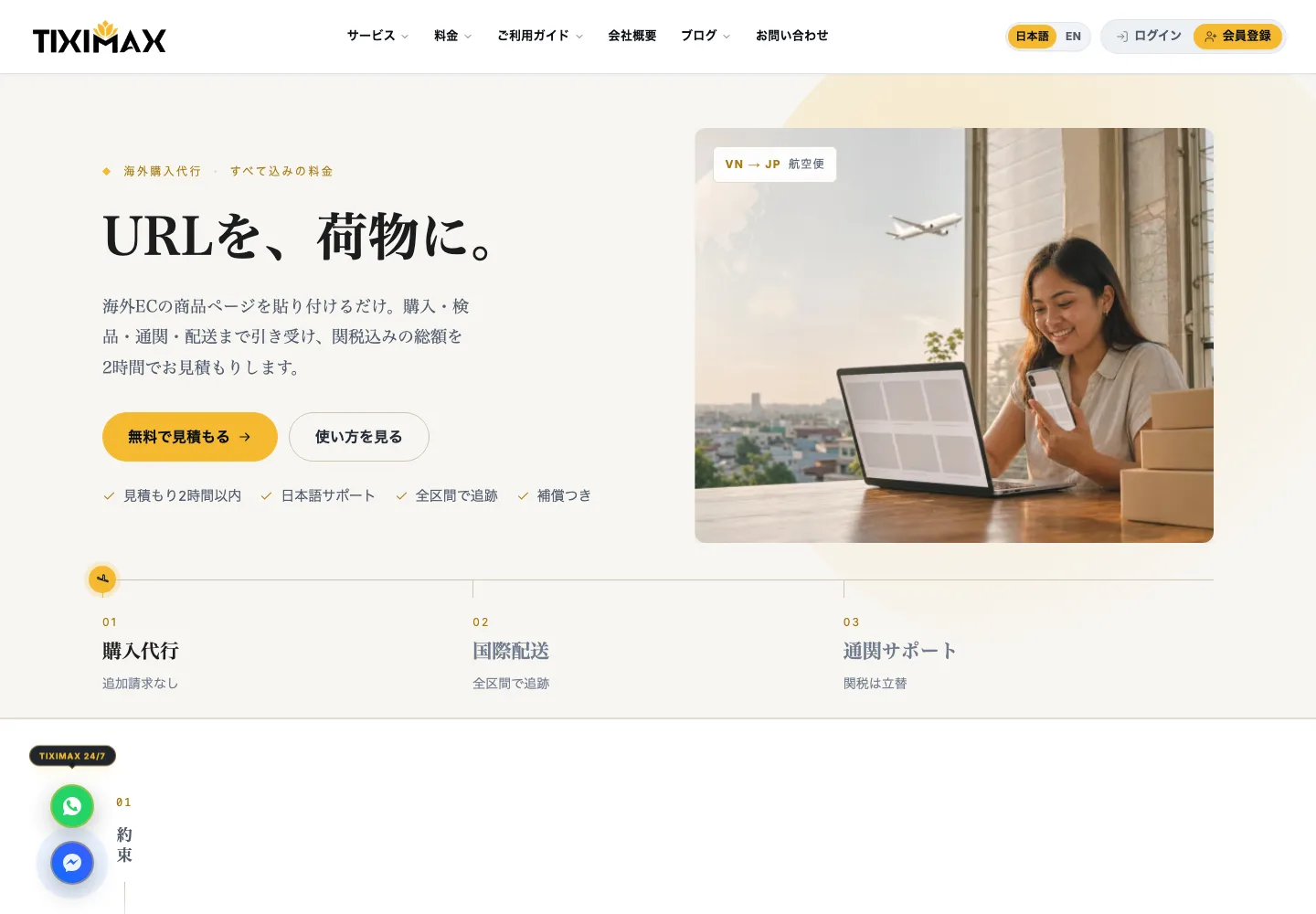
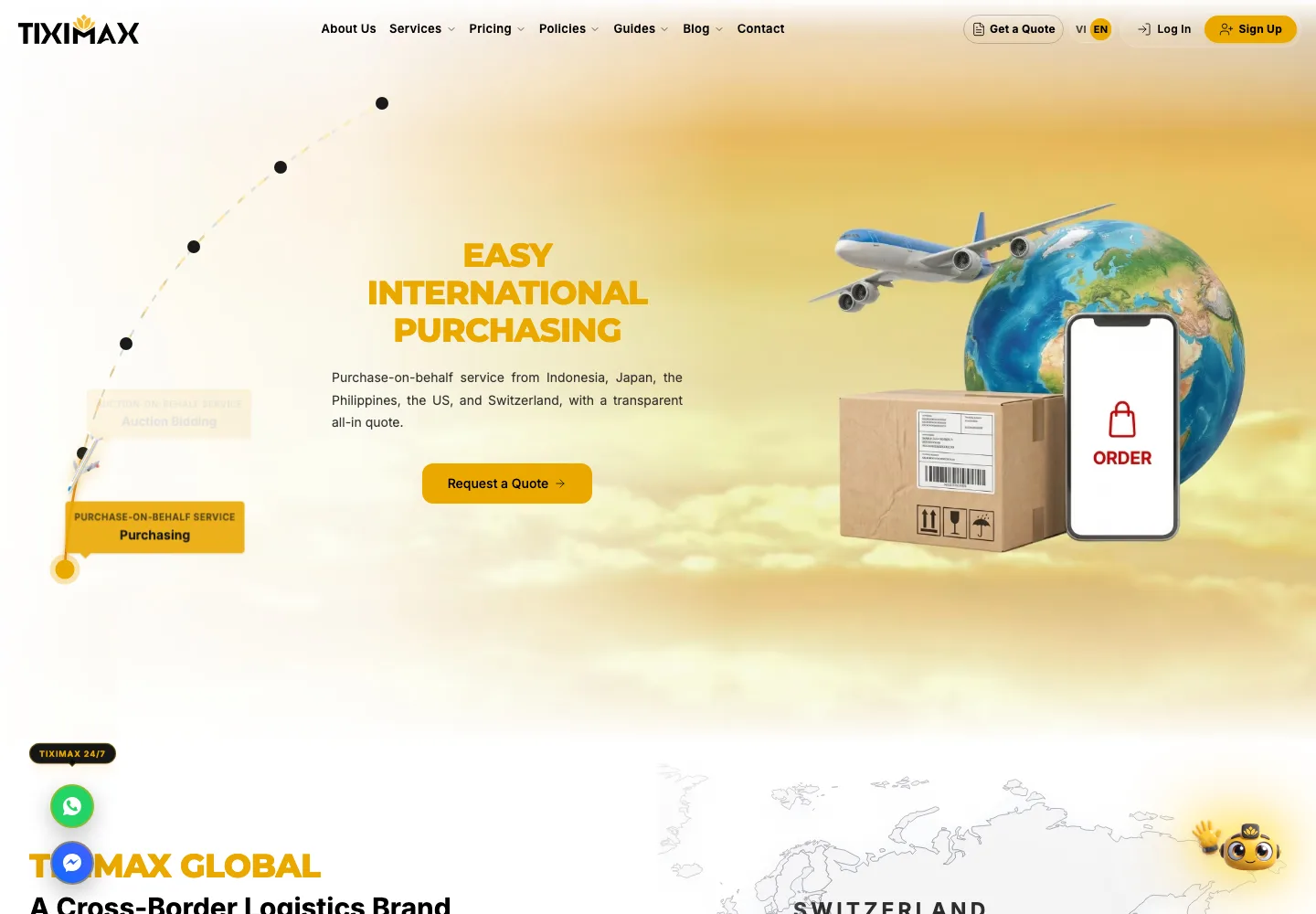
Here, we introduce the official websites for Japanese and global audiences, conveying the background of the business.
Established a configuration where customers, front-of-house, kitchen, and POS handle the same orders, allowing management of product and store-specific operational information from the head office. Supports daily restaurant operations including order changes, split accounting, ticket printing to the kitchen, inventory movement, and stocktaking. The scope of implementation and conditions for using external payment services vary by store.